
How to Evaluate a Distributor Before Giving Them Your Market
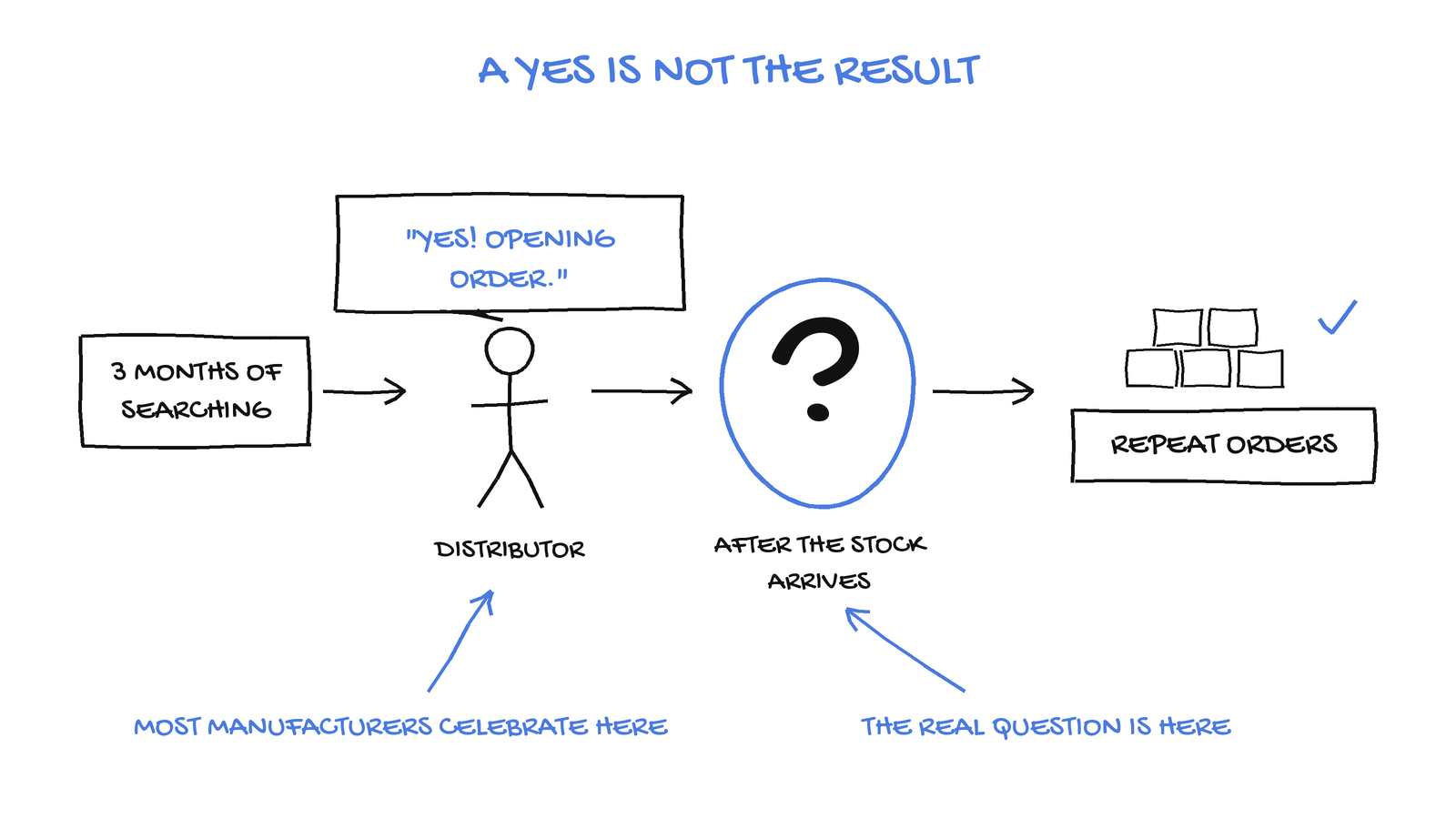
Say you’ve been trying to find a distributor in Germany for three months. One company finally replies, maybe even the owner likes your product, and they’re already talking about an opening order.
Let’s also say they have a warehouse, they already carry other established brands and they are intrigued at the possibility of an exclusive deal with you.
It would be extremely easy, and actually quite common, to treat that conversation as the result you’ve been working towards. But before you start negotiating territory, you need to understand what happens after they buy the stock.
So how do you evaluate a distributor?
To evaluate a distributor, check who they already sell to, how they introduce new products, whether they can support your range and why they would put effort behind it. Work through those questions together then agree on a practical first step that shows how the partnership would work.
Because finding someone willing to buy your product leaves another question unanswered.
Can they build repeat business for it? Let's answer that question.
Decide what you need your distribution partner to do
Before you start judging distributors, you need to get perfectly clear about the job you’re asking them to take on.
Let me give you an example.
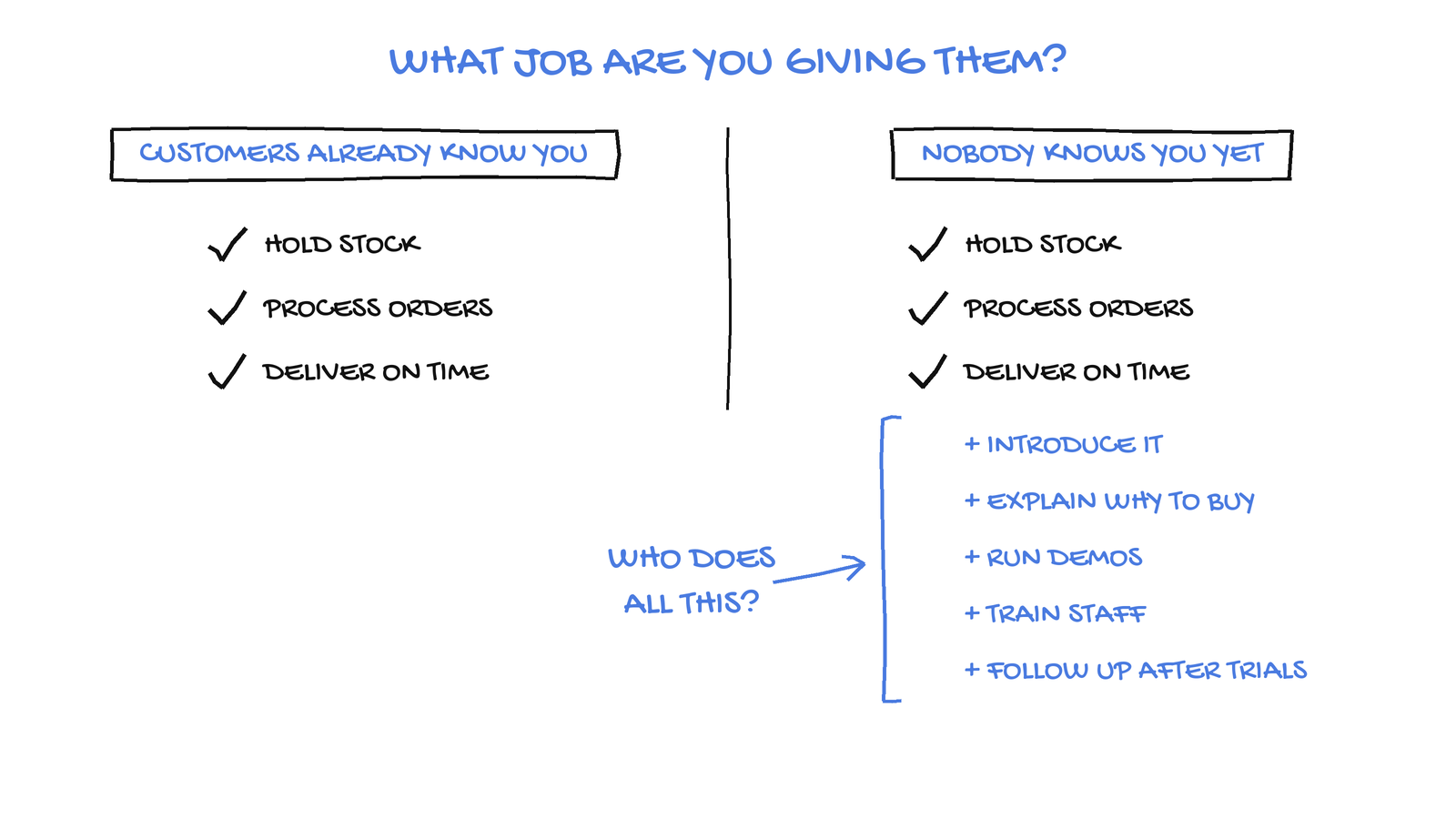
If customers already know your brand and regularly ask where they can buy it, you might need a partner who holds stock, processes orders and is reliable with delivery. On the other side of the coin, if nobody in the market knows you exist, there’s considerably more work involved.
That means someone has to introduce your product and someone also has to explain why a customer should consider it. Depending on what you sell, a certain someone may also need to arrange demonstrations, train staff or follow up after a trial.
So who is going to be doing all that?
Imagine you sell equipment that customers need to see working before they’ll buy. Your prospective distributor has a warehouse and an online catalogue, but no one available to demonstrate the equipment. And you’re expecting them to develop local demand while they expect you to send enquiries.
You could spend weeks agreeing on prices without resolving the thing that will determine whether either of you sells anything.
For that reason your distributor selection criteria need to reflect the work required and it needs to be one of the first things discussed. If expectations from both sides don’t match up, the deal won’t pass either way.
So start with how a customer will discover, evaluate, buy and use the product. Then establish what you’ll handle and what the distributor will have to handle.
Ask which customers they could actually introduce you to
I’ve seen this one play out many times: a distributor tells you they cover the whole country.
That could mean their salespeople regularly visit relevant customers across the country. Sure. But it could also mean they can put a parcel on a truck and send it anywhere.
You need to know which one you’re discussing.
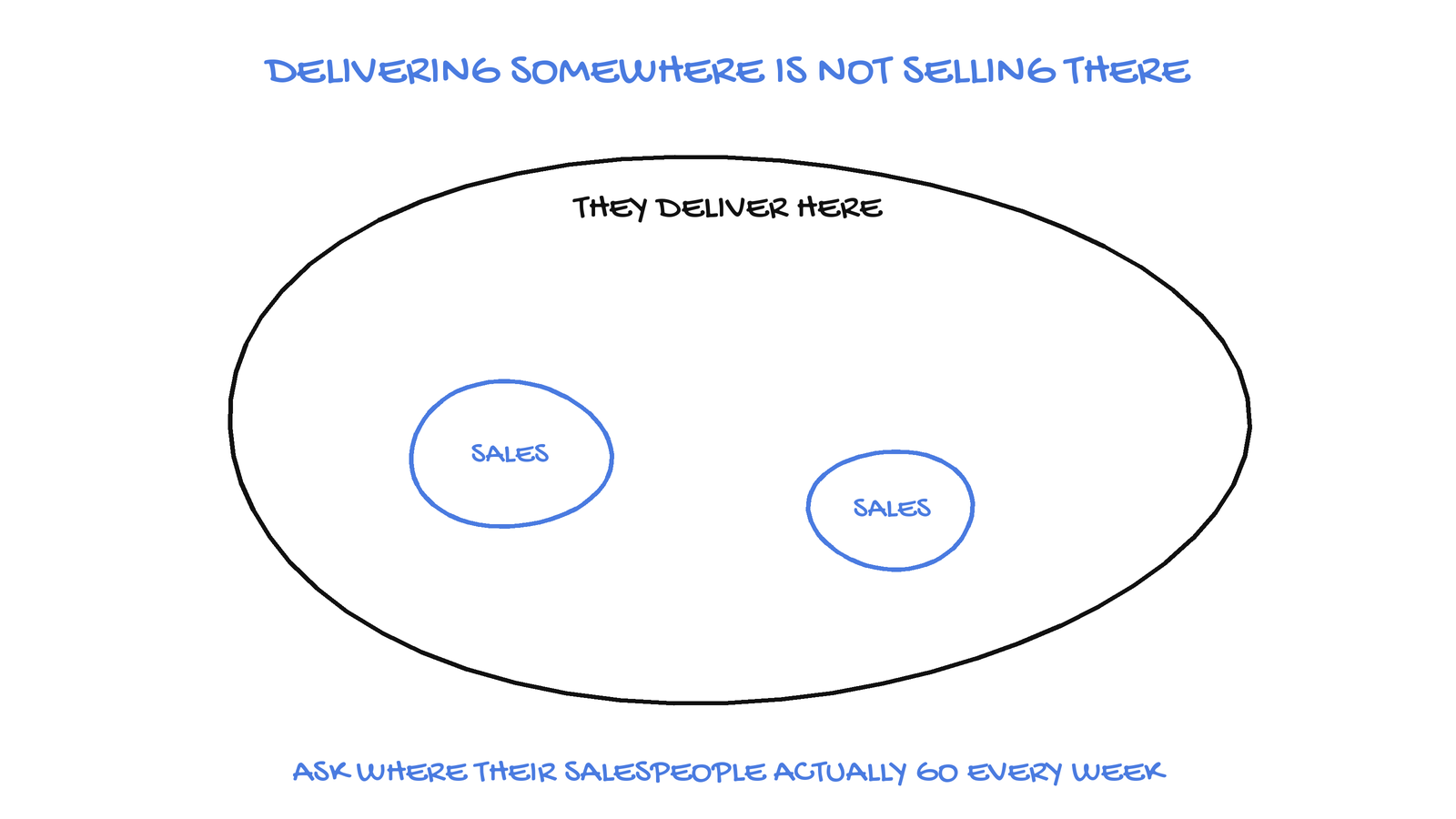
The same applies to industry experience. A company supplying agricultural machinery to large farms may have little access to independent garden centres. Both sit somewhere inside agriculture, but that doesn’t give them the same customer relationships.
So ask them something along the lines of:
“Which of your existing customers would have a reason to buy this product?”
By the way, most manufacturers I know are scared to ask questions. They are afraid that the distributor might get agitated and decide they will not buy. But be aware, if they are not willing to discuss this with you, and give you honest answers, they wouldn’t be much of a distributor for you either way.
And keep in mind that one good distributor is worth more than 10 that buy stock once and then you put them on your website as stockists knowing they will never buy again.
So stay with their answer, stay in the pocket and dig deeper. What do those customers buy now? Who makes the buying decision? How often does the distributor speak with them? What would make your product relevant to their next order?
You’re trying to understand whether there’s a believable route into the customer base they’re describing.
They don’t need to hand you over a confidential account list to prove that. However, they should be able to explain the types of customers they serve and give relevant examples.
Find out how they sold the last unfamiliar product
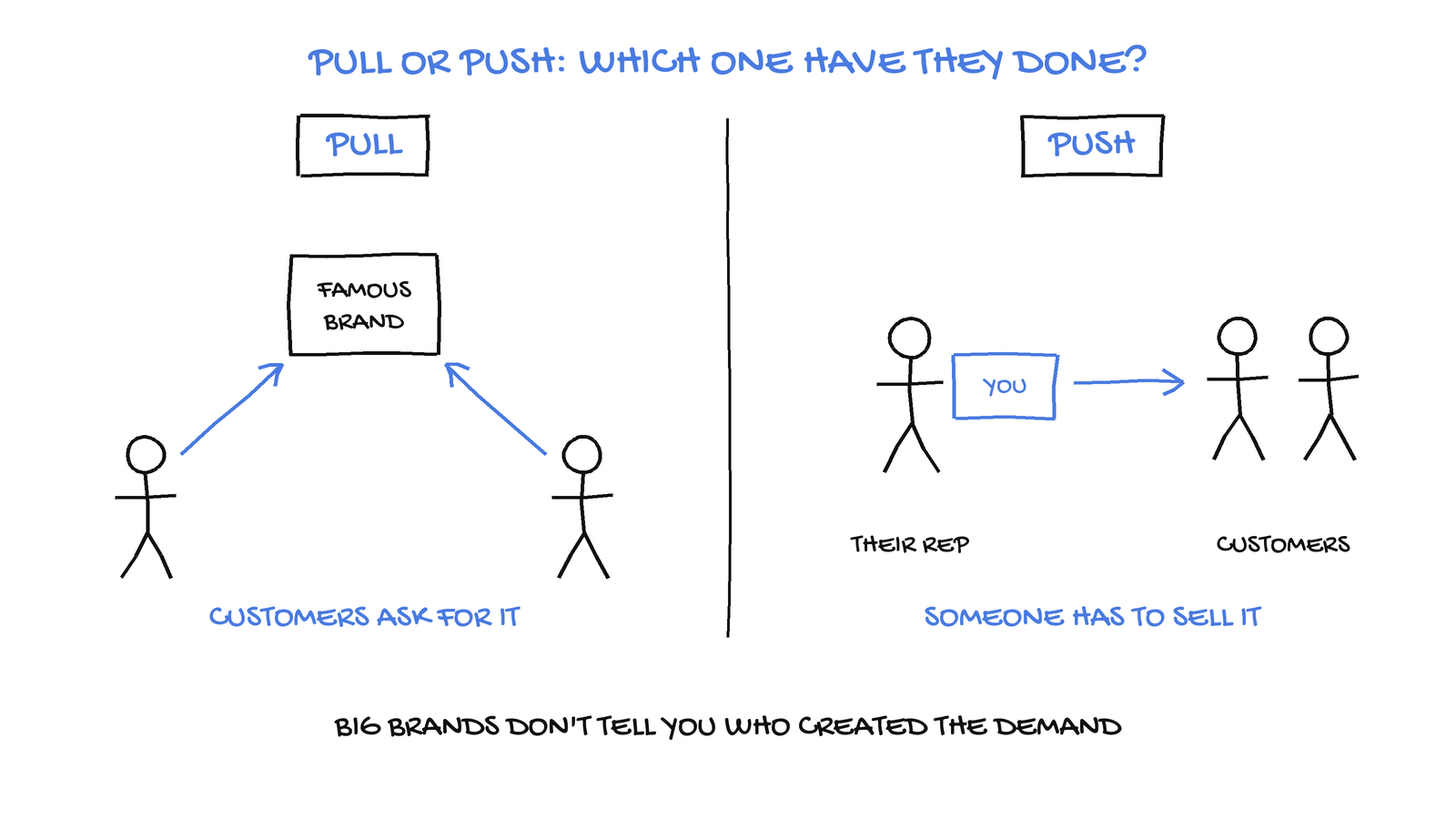
I’m going to take a guess here: customers aren’t asking for your brand the way they ask for Coca-Cola or Apple. Yet.
So when a distributor shows you a catalogue full of recognisable brands, it’s worth understanding what they actually contributed to those brands’ sales. Did they introduce something customers had never heard of, or were they supplying products people already wanted?
Did they introduce something customers had never heard of? Or did they supply products customers were already asking for?
Both are useful capabilities; it is just that your market entry strategy needs to account for which capability you’re getting.
A good question here is:
“Think about the last new brand you introduced. What did your team actually do after the first order arrived?”
Let them explain the sequence. Who learned the product? Who selected the first accounts? How did they introduce it? What happened when customers hesitated?
A detailed answer gives you something to investigate. You can ask about the salesperson involved, the support the manufacturer provided and what they would do differently next time.
Then bring it back to your product.
If you need demonstrations, who will run them? If samples are necessary, who pays for them and follows up? If salespeople need training, when will that happen?
Work out why they would prioritise your range
The distributor likes your product. They might even be excited about working together. But here’s a tough pill to swallow: that doesn’t mean you’re about to become a priority.
Put yourself in their position. They already have products to sell. Their salespeople know those products, their customers recognise them, and management has some idea of what will happen when they order more stock.
Now you’re asking them to put time and money into something unfamiliar. Why would they move your range up the list?
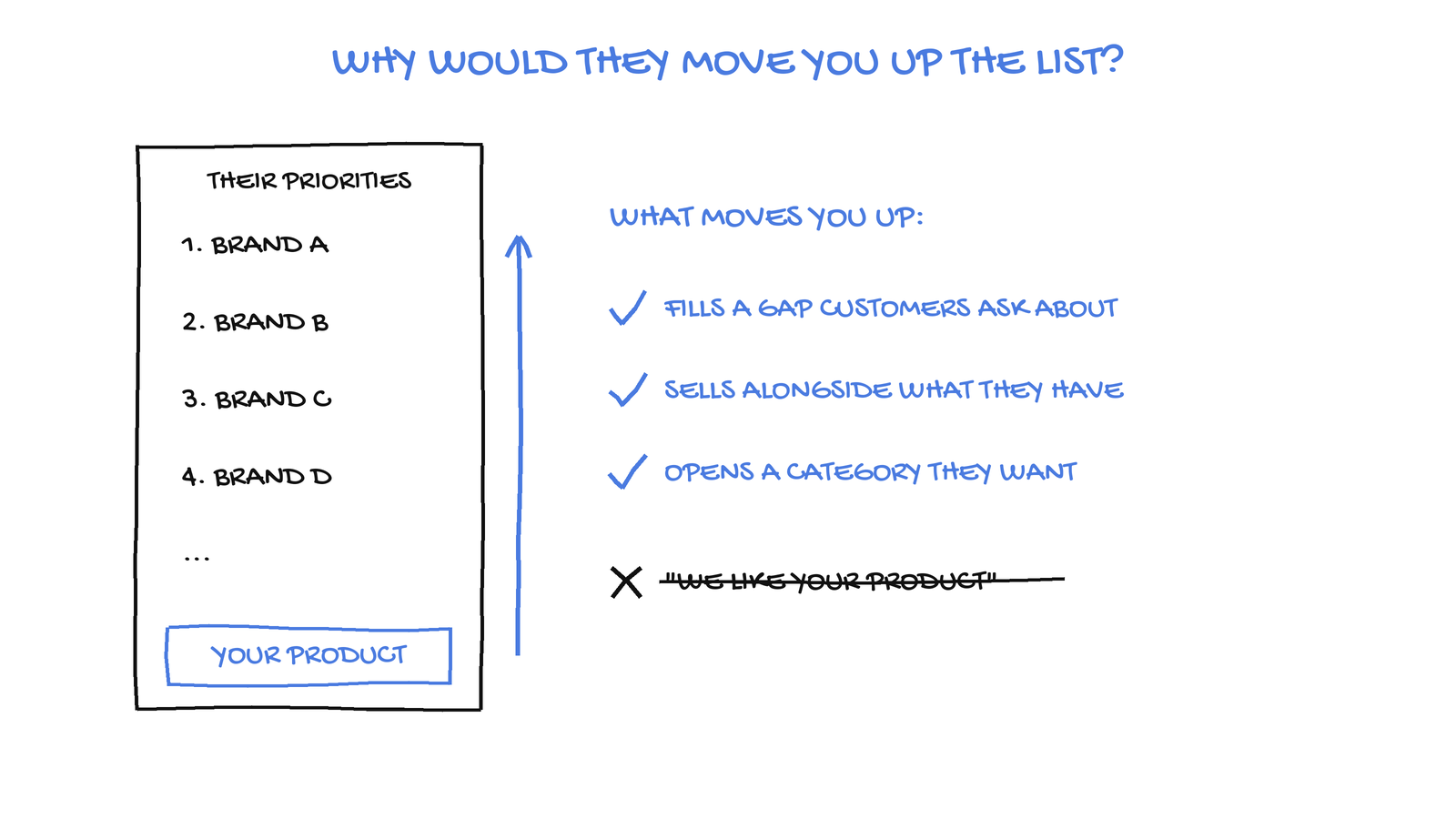
It may require training, additional stock and conversations that take longer than the ones they’re already having. There needs to be a commercial reason to do that work.
Perhaps your product fills a gap customers keep asking about. Perhaps it gives them something useful to sell alongside an established range. Perhaps it helps them enter a category they’ve already decided to develop.
Get very specific about that reason.
Yes, an attractive margin helps, but look at the work required to earn it. If each order is small and takes several demonstrations to close, the percentage margin alone won’t explain whether the opportunity deserves attention.
The U.S. International Trade Administration’s distributor checklist includes questions about sales incentives, competing product lines and the sales volume needed to justify carrying your range. Those are useful starting points for this discussion.
This is also why the biggest distributor isn’t automatically the strongest choice.
A large company may have the resources you need and a clear reason to develop your product. A smaller company may give it more attention but struggle to finance enough stock. You need to understand both sides before deciding.
Capability matters but so does the reason to use it.
Check whether they can support the sales they’re promising
Suppose the launch works and customers start buying.
Can the distributor replenish stock? Can they deliver consistently? Who handles a damaged shipment, a warranty issue or a customer who needs technical help?
These questions belong in distributor qualification because they affect whether the first sale turns into a lasting customer relationship.
The opening order deserves attention too. Work through why they’ve chosen that range and quantity. Which products do they expect to sell first? What customer demand supports the order? How will replenishment work if one product sells much faster than the others?
A large opening order can be encouraging but it is not always the best choice. It still needs a credible route out of their warehouse.
Decide which requirements are essential for your product. If customers need local servicing, establish a workable service arrangement. If the offer depends on immediate availability, check how stock will be funded and maintained.
Of course, some gaps can be addressed through training or a narrower launch. Others make the proposed partnership simply unworkable.
Make that distinction before enthusiasm starts influencing your judgment.
Agree on a practical first step
You won’t understand everything before working together. So choose a next step that gives both sides useful information.
That might mean reviewing samples with the salesperson who would carry the range. It might mean gathering feedback from a few relevant accounts. It might mean preparing an initial order around one application or customer segment.
Agree on who does what and when. Be equally clear about the information, samples or training you’ll provide.
Then watch how the work progresses.
A distributor who questions your proposed range may have thought carefully about what their customers will buy. Someone who asks for better training materials may be preparing to use them.
Take those conversations seriously. Them trying to get informed and challenging certain things tell you more than constant agreement.
And keep your expectations proportionate. You’re evaluating a potential distribution partner. They’re evaluating you too. Neither side should have to develop the entire market for free to prove they’re interested.
If they want exclusivity, agree on what comes with it
I’ve seen manufacturers get burned by giving a distributor exclusivity. They agree to reserve the market, expecting the distributor to develop it. Then very little happens, and the manufacturer has fewer options for moving forward.
So if a distributor really wants an exclusive distribution agreement, my advice is to tie it to a minimum commitment within an agreed timeframe. That could be a minimum purchase volume, units bought or new customer accounts opened. Choose something that reflects actual progress for your product and that both sides can clearly measure.
The conversation can be straightforward: “We’re open to giving you exclusivity. Let’s agree on what we both need to achieve for that arrangement to make sense.”
Then work through the target together. What can they realistically commit to? What support will they need from you? By when should it happen? And what happens to exclusivity if the commitment isn’t met?
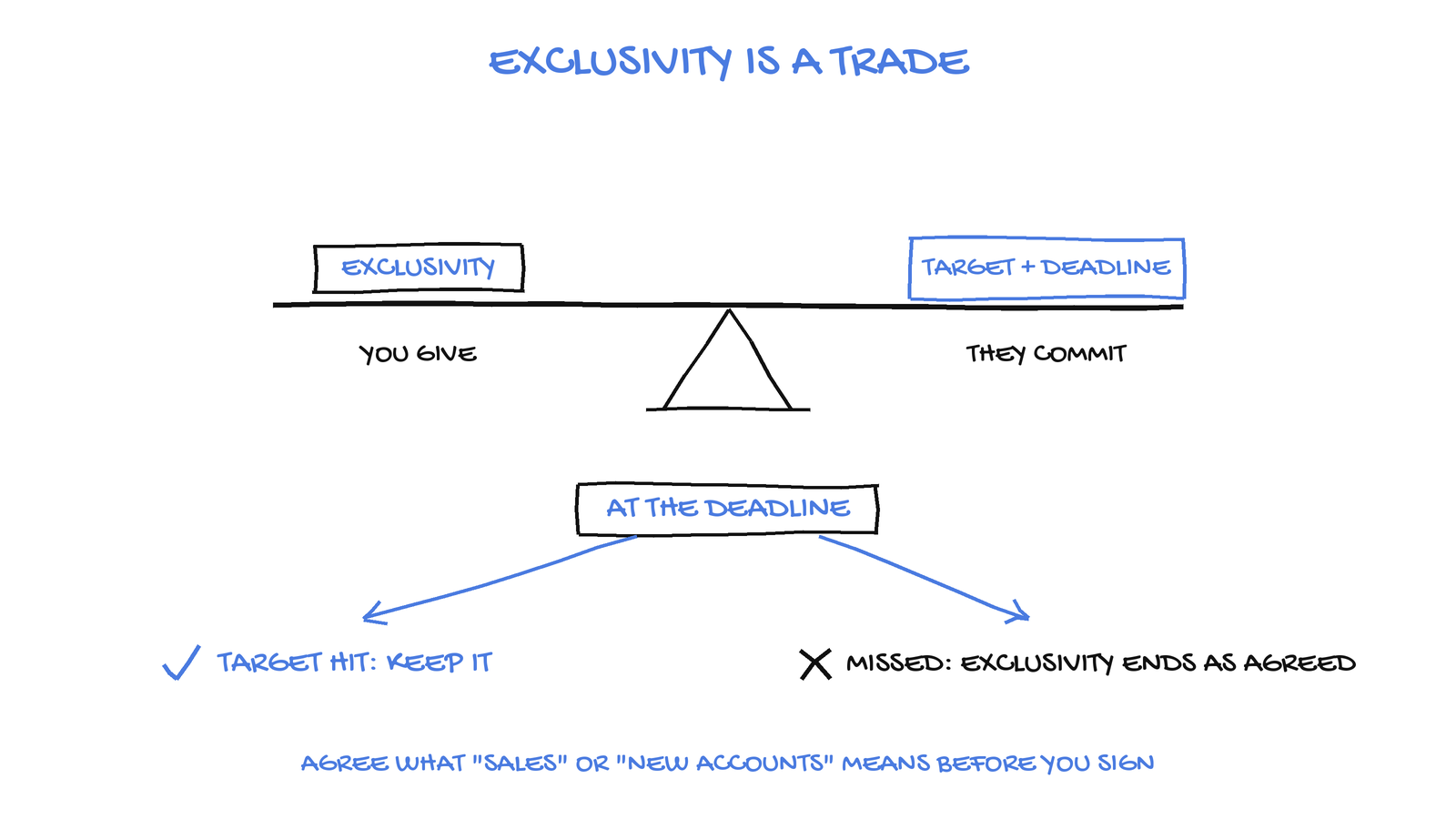
Be precise about the measure. “Sales” could mean what they buy from you or what they sell to their customers. “New accounts” could mean companies that placed an order or names added to a database. You want both sides agreeing to the same thing.
There can be a good reason for a distributor to ask for protection while they invest in introducing your brand. There’s also a good reason for you to expect progress in return.
Choose someone you can build with
A distributor doesn’t need to have every answer on the first call. You’re figuring out whether there’s a business worth building together, and both sides will have questions.
What matters is whether they understand the customers, see a commercial reason to carry your product and are willing to work through how to get it selling. You should be equally clear about what you’ll contribute and what they can expect from you.
Agree on a practical next step and see how you work together. If exclusivity becomes part of the conversation, tie it to a measurable commitment within an agreed timeframe.
I like to think of choosing a distributor as being a bit like getting married. The initial enthusiasm is nice, but you’ll be dealing with each other long after it wears off. Give yourself enough time and enough options to choose someone you can actually build with.
Pick wisely.