How Do Manufacturers Find Distributors? Five Routes to Market
Manufacturers usually find distributors through five routes: paid ads, direct outreach, referrals, trade shows and institutions like export agencies or chambers of commerce. Which one you start with depends mostly on whether you can already name the companies you want, and what they need to see before they take you seriously. Whichever route you pick, you still have to qualify the companies that come out of it and follow up properly.
Imagine you want to find a distributor in England. Someone suggests a trade show, so you start looking at stand sizes, travel and how much product you can bring.
But hold your horses. You haven't even established whether the distributors you want actually attend. Or whether you could speak with them before spending anything on a stand.
And by the way, I'm not saying the show is a bad investment. It might still be a good one. It's just that you haven't earned that conclusion yet, because the show is only one way of getting in front of those companies. Depending on the market, you might be able to reach the same distributors directly, through someone who already knows them or through an export agency, and learn a lot before you pay for a booth.
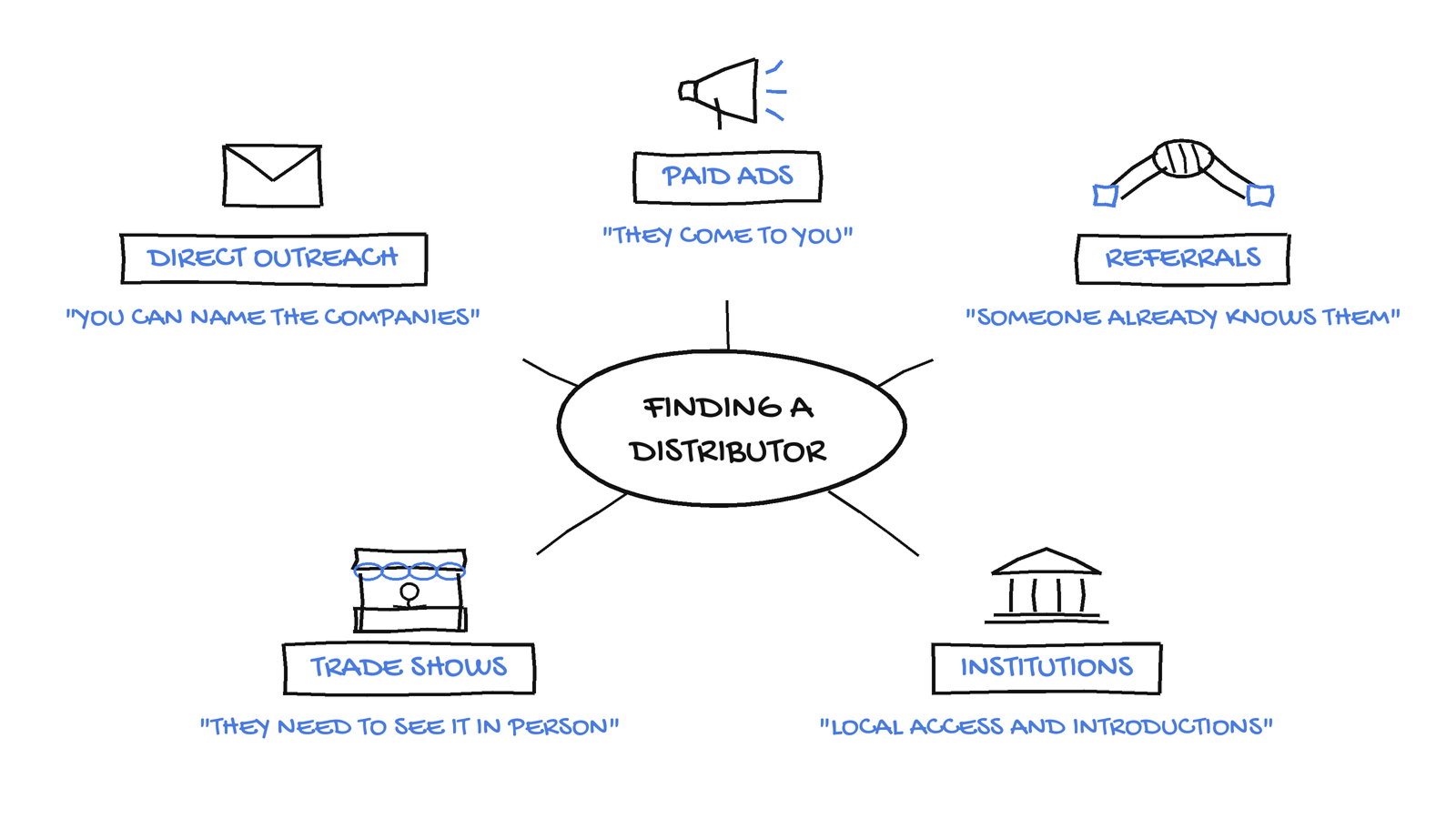
One book I like to reference often is Traction by Gabriel Weinberg and Justin Mares. It covers 19 ways to acquire customers and a framework for testing a few of them before you commit heavily to one. Finding distributors is a narrower problem than that, so I group the options into five routes: ads, outbound, referrals, shows and institutions. If you want the broader version, give the book a look.
Here is how I would compare them:
Route | Worth considering when | Main limitation |
Paid advertising | There are too many suitable partners to list one by one, or you can't easily find them by name, but an ad platform lets you target that type of business or role | Interest can come from people who lack the business or capabilities you need |
Direct outreach | You can identify companies with relevant customers and capabilities | A good target list still needs a convincing commercial proposition |
Referrals | Existing relationships connect you to the market | Your're limited by the size of your network |
Trade shows | Relevant partners attend and meeting or demonstrating in person has value | The event commits significant time and money before you know the outcome |
Institutional networks | Export agencies, chambers or industry organisations have relevant local access | Services vary in scope, eligibility and the depth of qualification |
How can manufacturers use paid advertising to find distributors?
Paid advertising puts your distribution opportunity in front of companies that aren't already talking to you. It works when the ad and the page behind it make two things clear to a distributor: why they should trust you, and what's in it for them.
The funny thing is that a lot of people believe you can't advertise to distributors on social media. Because of that, very few manufacturers actually try it, so you're not competing with many other suppliers for those distributors' attention. We've been running these campaigns for years and have used them to help clients find partners in more than 100 markets across 5 continents, and the results have been insane.
But be aware, advertising to distributors is a completely different job from advertising your product to consumers.
Say you manufacture garden products. A homeowner cares about how the product looks, whether it works and what it costs. A distributor has to think about which retailers would buy it, how it fits their existing catalogue, how much stock they'd need to hold and how much support it takes to sell. An ad that only shows a nice product doesn't answer any of that. The product might catch their eye, but the business opportunity is what gives them a reason to speak with you.
I say this on a lot of my calls: before a distributor will even speak with a supplier, they need a reason to trust you and a reason to believe there's something in it for them. Neither of those has much to do with your product's specs. If you make mechanical parts, a distributor doesn't really care whether the wall is 3 or 3.5 millimetres thick. They care whether they can sell it, because nobody buys 1,000 units of anything unless they're confident they can move them.
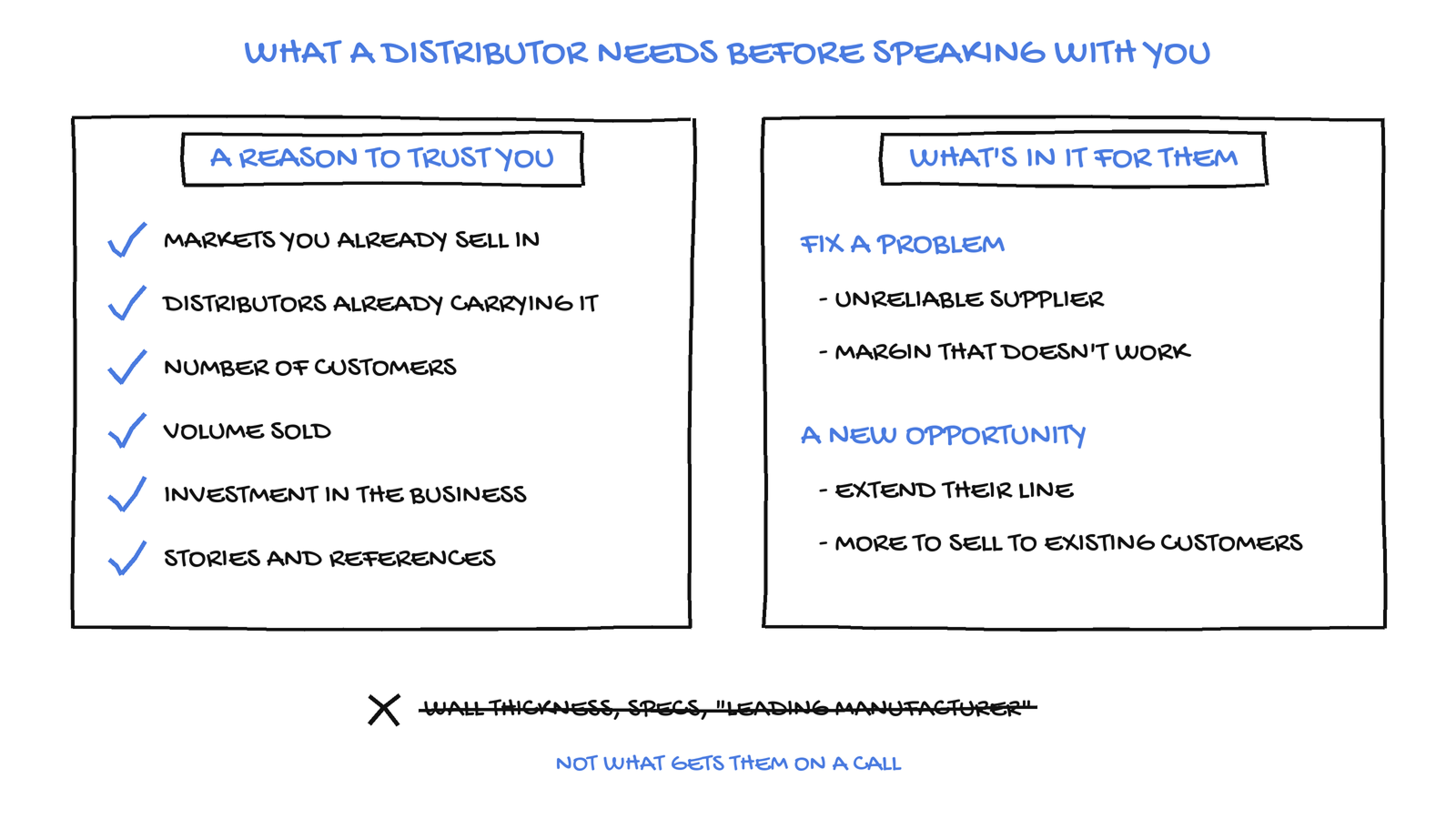
Trust is where most manufacturers go wrong. The usual move is to talk about yourself, "we are the leading manufacturer of X in Europe," plus a photo of the factory and the size of the facility. Everybody says the same thing, so it doesn't register, and telling someone to trust you rarely makes them trust you anyway. It works better to give them information that lets them reach that conclusion on their own: the markets you already sell in, distributors already carrying the range, how many customers you have, how much you've sold or what you've invested in the business. A short story about how an existing distributor started with you, or a reference they can actually contact, does that job far better than another claim about being the best.
The second part is what's in it for them, and that usually comes down to one of two things. Either you fix a problem they already have, like an unreliable supplier or a margin structure that doesn't work for them, or you give them a new opportunity, like extending their product line or giving their salespeople something else to sell to customers they already visit. Either way, help them picture selling it. Show them that someone else is already selling it, that you've been selling it yourself, or that there's real demand in their market nobody is covering yet. Only use claims you can back up, because a serious distributor will check them later.
Be careful about how you position yourself here, too. If your ad reads like "Distributors wanted, contact us today," you're telling people you'll take whoever replies. The distributor who does reply then comes into the first call believing they have the leverage. They ask for exclusivity for the whole country before placing an order, push for a bigger margin and want free samples and marketing support, and you spend the call defending your terms instead of finding out whether they're any good. When the ad and the page show that you're choosing partners carefully, the conversation tends to start the other way around, with them explaining why they'd be a good fit. You win more of that back on the call by asking the kind of questions that separate a real potential distributor from someone who just likes the product.
Then decide how much to put on the page before someone enquires. Hiding everything behind a form might get you more submissions, but it moves basic screening onto your sales team. If stockholding is essential, say so on the page and save both sides a conversation. A simple version of the page says who you're looking for, which customers they should already serve and what you expect them to do, whether that's holding stock, demonstrating the product or providing service. The form can then ask a few things that help you decide who to call first: what they sell now, who they sell to, which area they cover and whether they already carry anything similar.
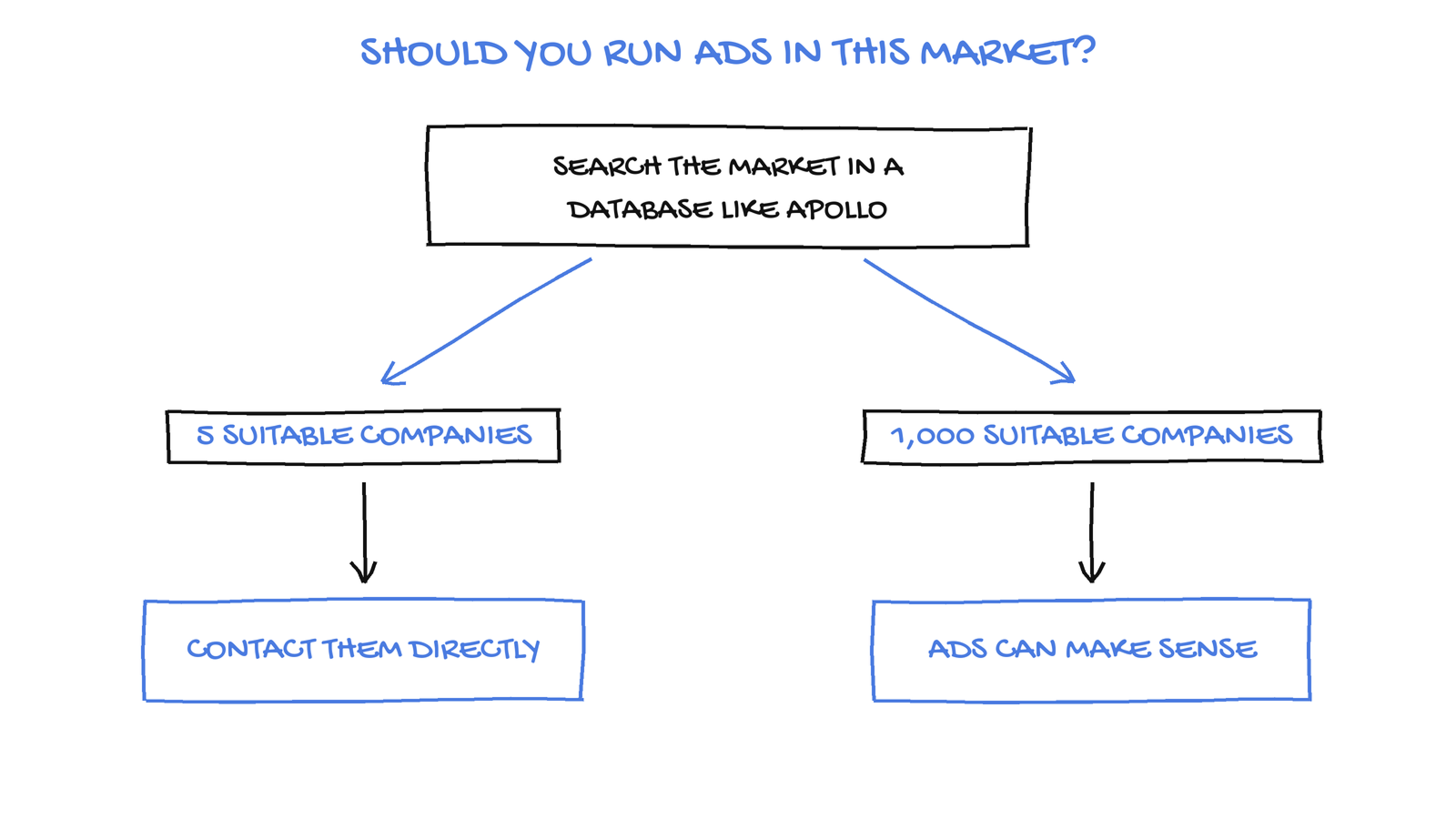
Before you spend money, check whether there are enough of the right companies to justify ads at all. Ads can reach almost anyone; the real question is how much you pay for each conversation you get out of them. A quick way to check is to search a database like Apollo.io for the type of company you want in that market. It's superficial, but it gives you a rough idea. If there are five suitable companies, it doesn't make sense to run ads, and you'd be better off contacting them directly. But if there are a thousand, sure, ads can make sense.
From there, the copy decides who replies. If you write an ad about fixing back pain, you'll probably get factory workers, but if it's about improving a facility's efficiency by 15% over the next year, you're more likely to hear from someone in operations, procurement or management. So if your ad is mostly about the product, expect enquiries from people who want to use it rather than people who want to sell it.
And follow the result past the form. The number of suitable companies, the conversations you actually held and the next steps you agreed will tell you far more than how many enquiries came in.
If you're considering this for your own company, we break down the advertising side in more detail inside Distributor Launch, our free Skool community for manufacturers looking for resellers. Start there if you want to put this approach into practice.
How do you find distributors through direct outreach?
Direct outreach means building a list of companies that could realistically sell your product and contacting them yourself. It works best when you can actually name the businesses you want and give each one a specific reason your product belongs in its range.
The tricky part is that "distributor" covers a lot of very different businesses. Say you make professional salon products and want a partner in France. Search for salon distributors and you'll get a list, sure. But one of those companies might supply the big salon chains, another might work mostly with independent salons, and a third looks relevant until you realise most of its sales come from consumers buying online. They can all call themselves distributors, and maybe only one of them reaches the customers you need. Some of the right companies won't even use the word. They'll call themselves wholesalers, importers or specialist suppliers.
So start with the customer and work backwards. Look at the salons you want to sell into, find out which brands they already stock and who supplies those brands locally. Complementary brands are one of the best places to look, because a company already selling haircare or equipment into your target salons has a reason to add something those same customers could buy on the same order.
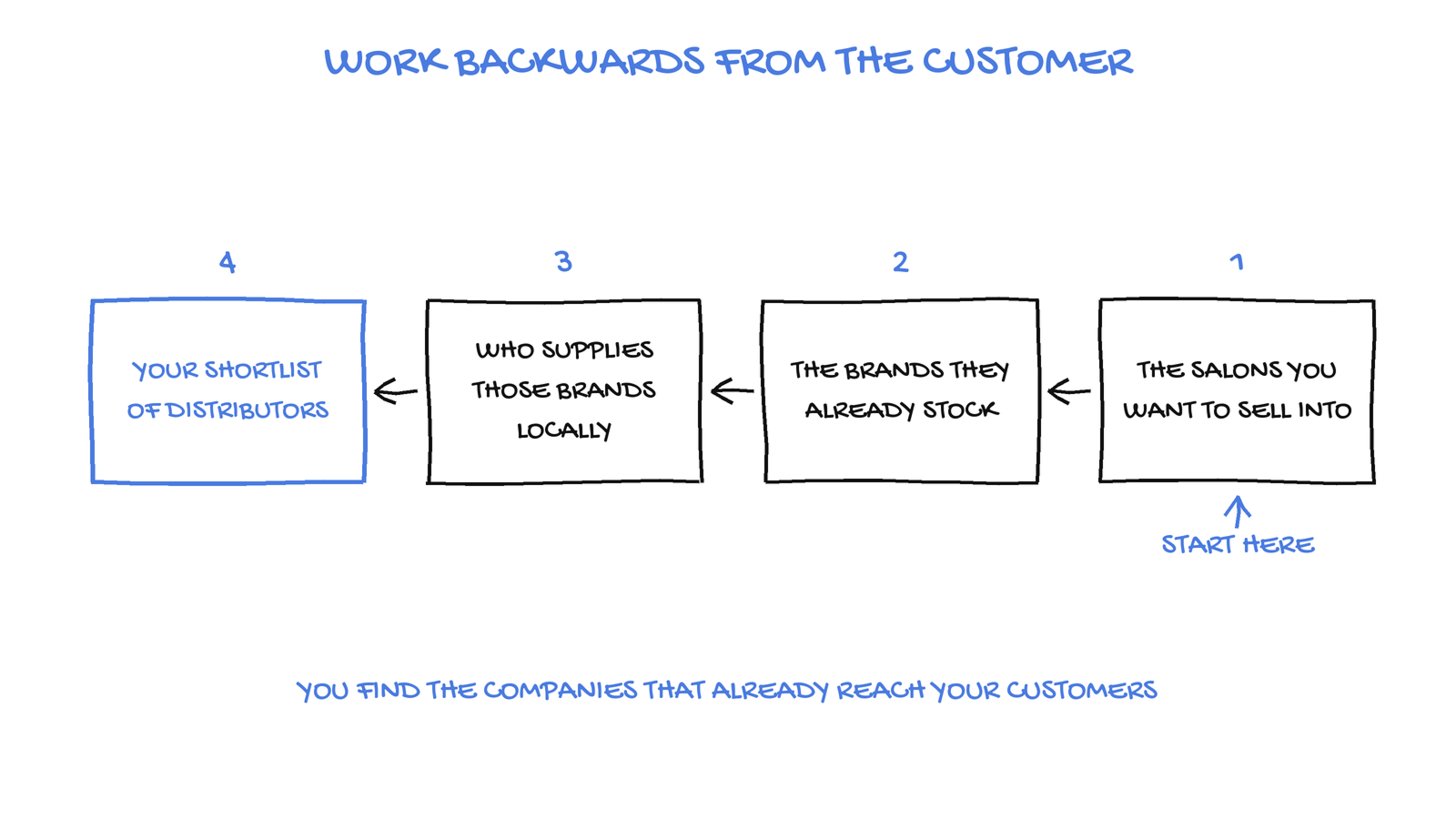
These are the places I'd build the first list from:
Databases like Apollo, Ocean.io and LinkedIn Sales Navigator. They're a good starting point for finding both the companies and the people inside them.
The "where to buy" or distributor pages of competitors and complementary brands in that market.
Your target customers. Check which suppliers they mention, or call a few and ask where they normally buy products in your category.
Trade show exhibitor lists, even for shows you don't plan to attend.
Industry associations and trade directories. Search for importers, wholesalers and dealers, not just distributors.
This can be done on a much deeper level which you don't need yet. We, for example, run our own Python scrapers that search and crawl Google Maps, competitors' websites and pretty much anywhere else a company has left a footprint online. Those databases are often times larger and of significantly higher quality. However, we will keep this for another article. For most manufacturers, the databases above are more than enough to start.
For every company on the list, write down what it sells, who it seems to sell to, which regions it covers and why you think your product could fit. There's plenty you won't know from the outside. You won't know whether their salespeople actually visit the salons you want, whether they tried your category before and it didn't sell or whether nobody has ever offered it to them. The main way to find out is by asking, so keep a note of it for the first conversation.
Once you have a shortlist, find the person who actually decides on new suppliers. At a smaller distributor, that's often the owner. At a bigger one, it might be a purchasing manager, a category manager or someone in business development. If you can't work it out, call the company and ask who looks after new suppliers in your category. It takes two minutes and beats sending a catalogue to a general inbox and hoping somebody forwards it.
Then there's the first message, which is where most outreach falls apart. You've probably received the kind of email I mean:
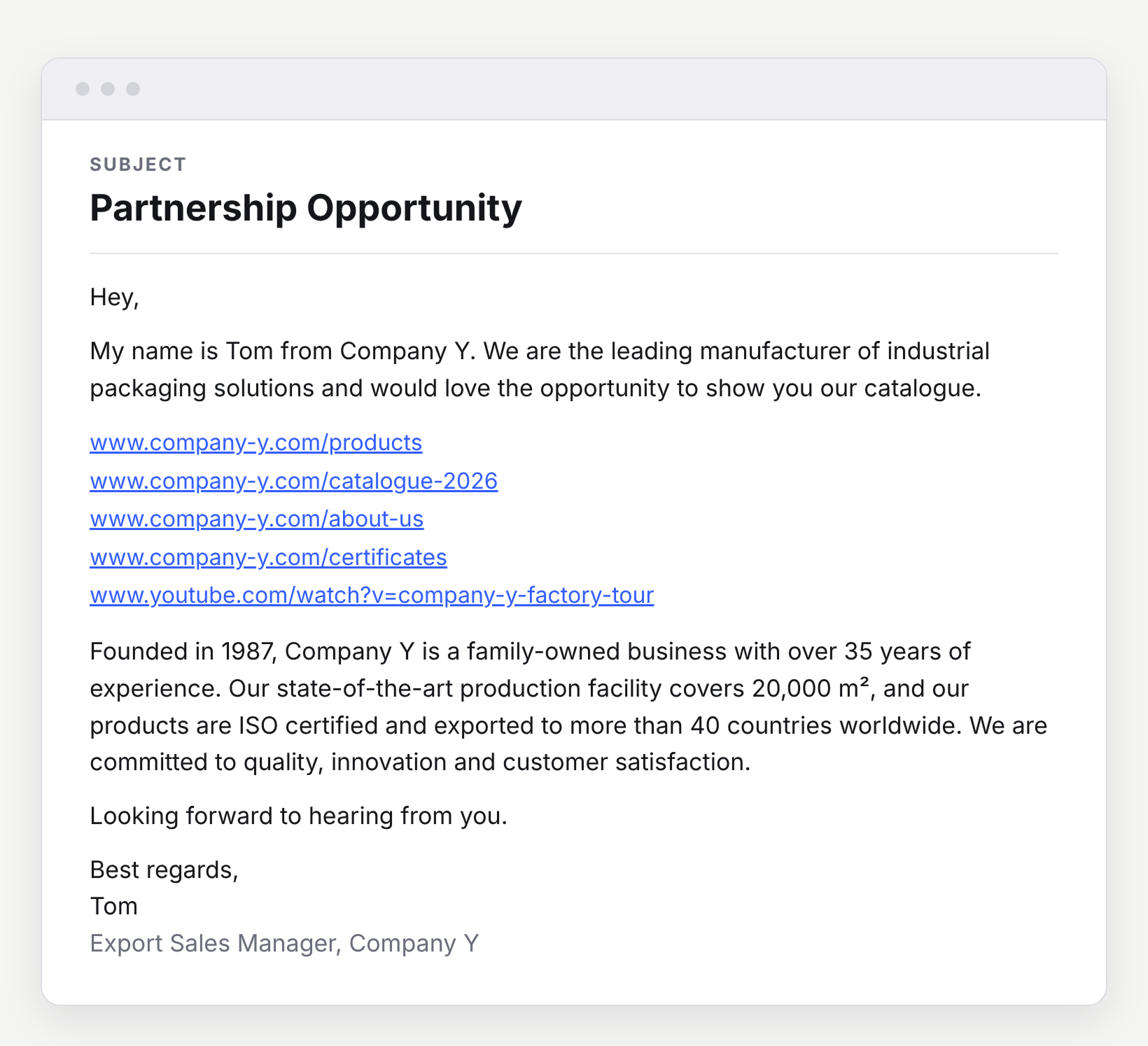
followed by a handful of links and a paragraph about the company. Every supplier sends some version of it. It's entirely about the sender, so the distributor has no real reason to answer.
What I like to do instead is something I call the pencil effect. Think about first grade, when you were trying to make friends. You didn't walk up to another kid and ask whether they wanted to be your best friend for the rest of your lives. You asked to borrow a pencil or an eraser, something small and easy to say yes to, and the conversation started from there. Email works the same way. Asking a distributor to consider a partnership in the very first message is the best-friends-forever question. A small question, like whether they're the person who looks after new suppliers in your category or whether their customers ever ask for a product like yours, is much easier to answer and gets you into a conversation.
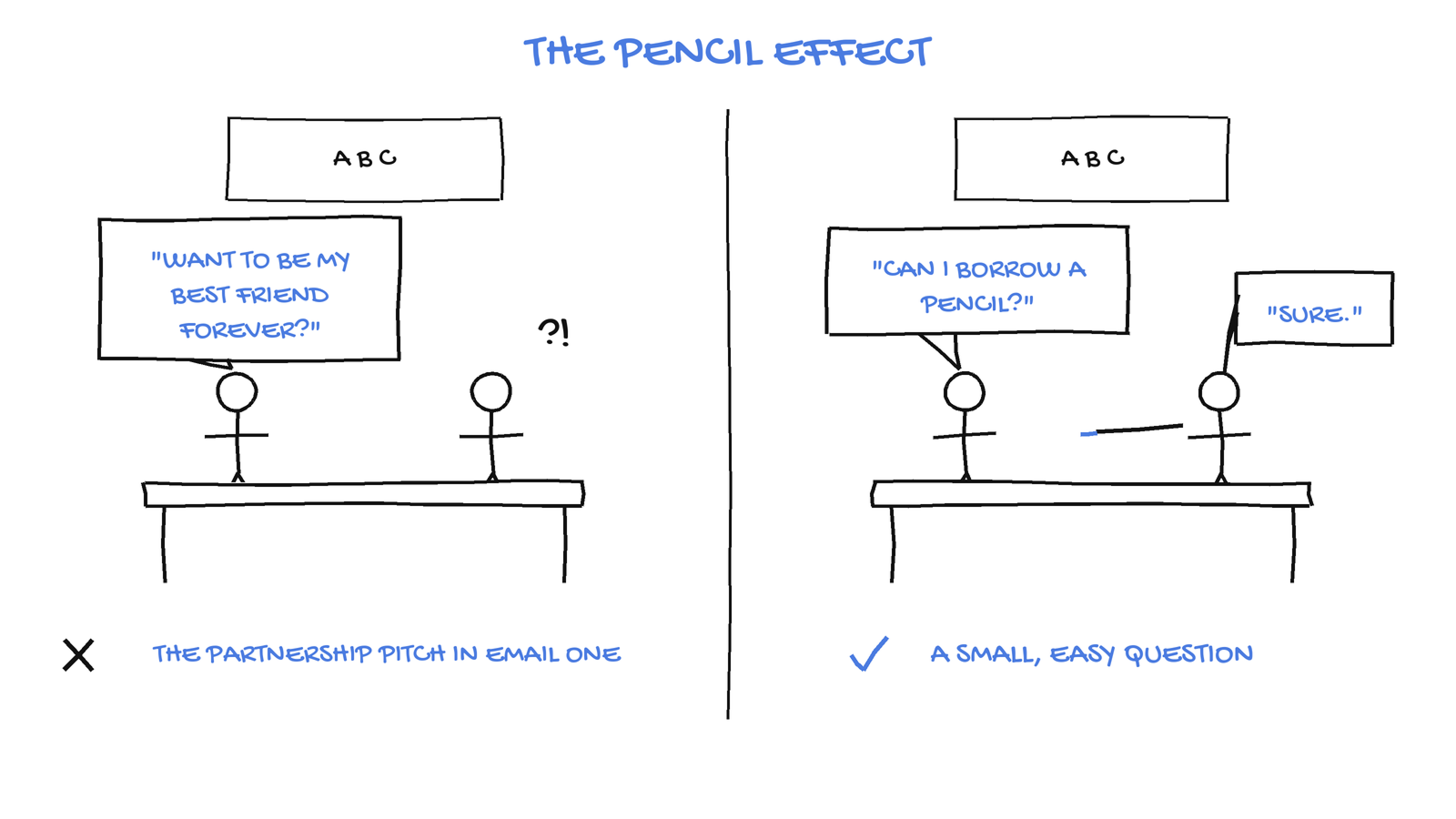
The other approach that works is a straight offer. Say plainly that you're looking for a distributor to take your range into a specific market, add a line about what's in it for them and ask if they'd like to have a chat. Keep it short, with no catalogue and no wall of links.
Only go into the deeper discussion once they answer. And keep in mind, don't talk about yourself too much until they start asking. Until then, the conversation is about you asking questions and working out whether they're the right partner. They'll ask about your company when they're interested enough to care.
Keep the first step proportionate, too. Someone can be willing to look at your range without being ready to talk about national exclusivity, annual targets and an opening container order. The first conversation only needs to establish whether there's enough interest on both sides to keep going. Once it gets serious, though, be ready for more than product specs. They'll want to know who buys it, what margin they can make, what support you provide and how much stock you expect them to hold.
Follow up properly, because people miss emails, and make each follow-up add something, like a relevant application or a line about why you chose them. Respect opt-outs and the rules for the market and channel you're using. Then pay attention to why companies reply or decline. If the right distributors keep telling you they already carry a competing range, you probably need better targeting or a sharper angle. If they like the product but the stock commitment puts them off, sending more emails will only get you the same answer, and the thing to fix is the offer.
How can referrals help you find distribution partners?
From what I've seen, referrals or word of mouth are probably the most common way manufacturers end up with distributors. Although calling it something they "use" is a stretch. Referrals mostly just happen to them after years in an industry.
So how do you get referrals without waiting years for them?
Well, it's simple. You ask for them. But there's a method to making them work, and it comes down to two things: specificity and volume.
Specificity means describing the business you need clearly enough that someone can recognise a match. "Do you know any distributors in France?" leaves the other person to do all the work. They have to guess what kind of company you mean, which customers matter and whether anyone they know fits, and most people won't bother. Compare that with:
"We're looking for a French importer or wholesaler that already supplies independent garden centres, can hold stock and has salespeople who could introduce a new range. Is there anyone you've worked with who fits that?"
Now they have a recognisable business to look for.
Volume means asking pretty much everyone you deal with professionally: distributors you already work with in other markets, customers, complementary manufacturers, suppliers, logistics partners and the people you meet at events. One request rarely produces the right introduction, but asking twenty people the same specific question gives you a much better chance.
You can also reverse the usual referral question. Instead of only asking other manufacturers who could distribute your product, ask the customers you want a distributor to serve. A garden centre owner can tell you which suppliers they already buy from and, more usefully, which ones are actually good at introducing new products. That might point you to a company you'd never have found by searching for distributors, and it shows you how new products really get into that kind of account.
When someone does have a name, make the introduction easy. Send them a short paragraph they can forward that covers what you make, who the partner would sell to and why you think the two companies could fit. Ask before you mention their name to the distributor. If it makes sense, there can be something in the deal for the person making the introduction as well, as long as you agree it openly. Don't make them interpret a long presentation on your behalf.
And keep your judgment once the introduction arrives. A trusted contact can introduce you to an honest, capable person whose business still doesn't reach the customers you need. The relationship gets you a conversation faster, but you still have to work out whether the partnership makes commercial sense.
When are trade shows a good way to find distributors?
Trade shows are worth it when the distributors you want actually attend and there's a real reason to meet them in person, like showing them a product they need to see working or moving a conversation forward. What you get out of a show depends far more on the work before and after it than on the stand itself.
The first thing you need to be really clear about is what you're trying to achieve there. Is it building authority, showing your face in the market, meeting existing customers or signing new distributors? Trying to do everything at once usually means doing none of it properly. I'd also be careful about using an exhibition to launch a product. In most cases it doesn't work, because nobody at the show knows the product yet and a distributor walking past has very little reason to stop for something they've never heard of.
Then separate two decisions that often get lumped together: whether to go to the show and whether to pay for a stand. You might have a strong reason to visit, meet a few potential partners and get a feel for the market without having anywhere near enough evidence to justify exhibiting. On the other hand, if you sell equipment that a distributor really needs to see running, a stand or dedicated meeting space can make those conversations much more productive.
If meetings with distributors are the goal, the best thing you can do is pre-book them. Go through the exhibitor list and any attendee information you can get, work out which distributors and retailers will be there and contact them well before the show. It's much easier to get someone to agree to a short meeting at a show they're already attending than to persuade them to schedule a separate call, and it's much easier to close a deal in person.
I call this thetrust ladder. You want your most complex conversations to happen in person. If you can't do it in person, do a video call. If video isn't possible, use the phone, and if you can't get someone on the phone, use WhatsApp, LinkedIn or whatever they actually reply to. Email comes last, because email is where deals go to die.
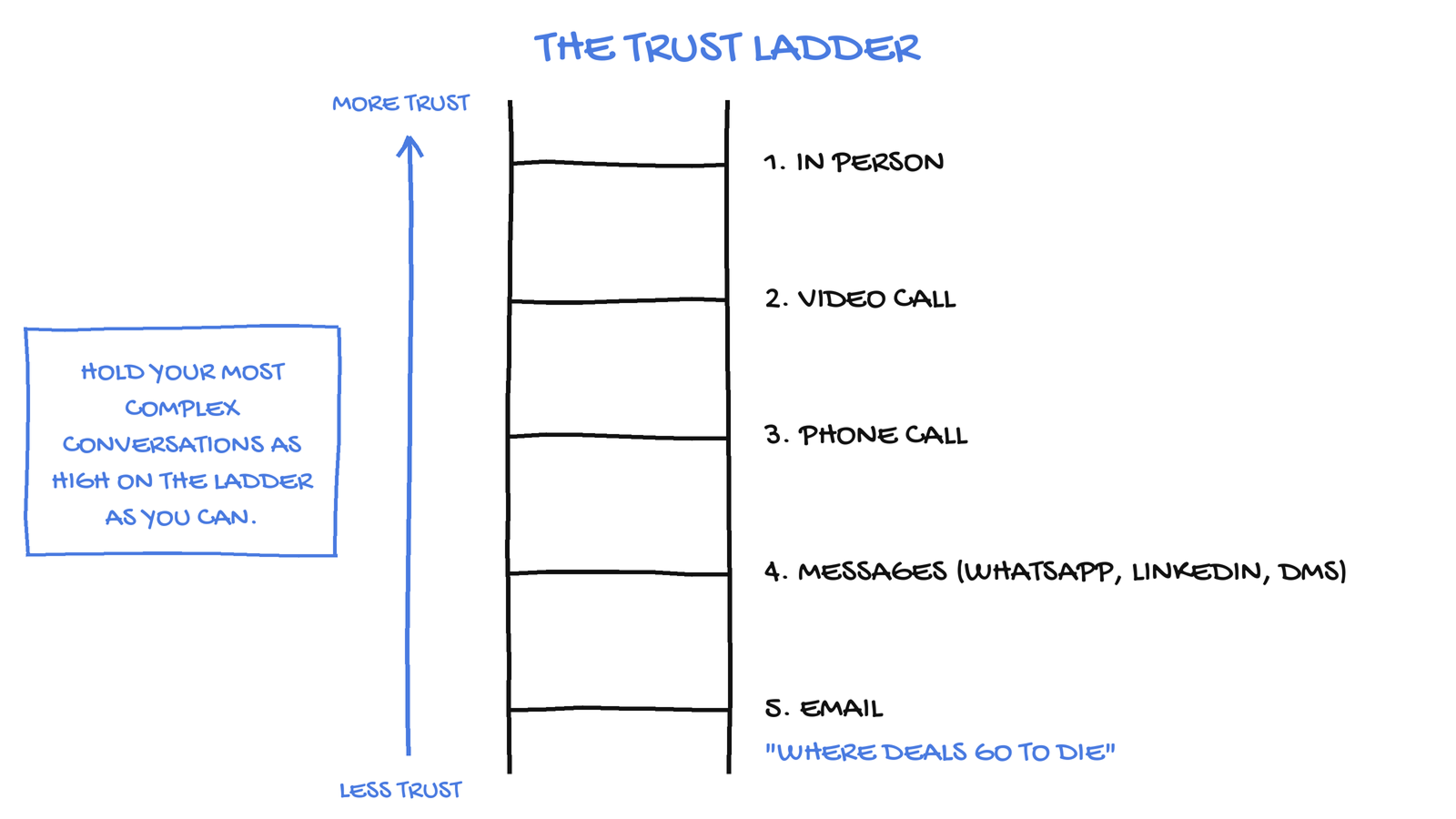
So if you've already spoken to someone before the show, you have common ground. You know they're qualified and what they're looking for. Then they see the product, meet you in person and pick up the conversation where you left it, which makes the deal much easier to close than one with a stranger who stopped at your stand.
A lack of replies before the show doesn't prove it will fail, but it tells you something while you can still change the plan. It's much better to find out your pitch is unclear now than when you're already standing behind an expensive display.
At the show, plan the next step while you're still talking. If someone wants samples, agree who receives them, what they'll assess and when you'll speak again. If somebody else makes the decision, agree how that person will be brought in. A badge scan tells you somebody stopped by, but it doesn't give your salesperson anything to act on the following week.
One more thing that sounds small but works really well: take a photo with the person you spoke to and send it with your follow-up. Everyone at a show speaks with dozens of companies, and by the following week most of those conversations blur together. I started doing this at a show in Bologna, and replies to my follow-ups roughly quadrupled.
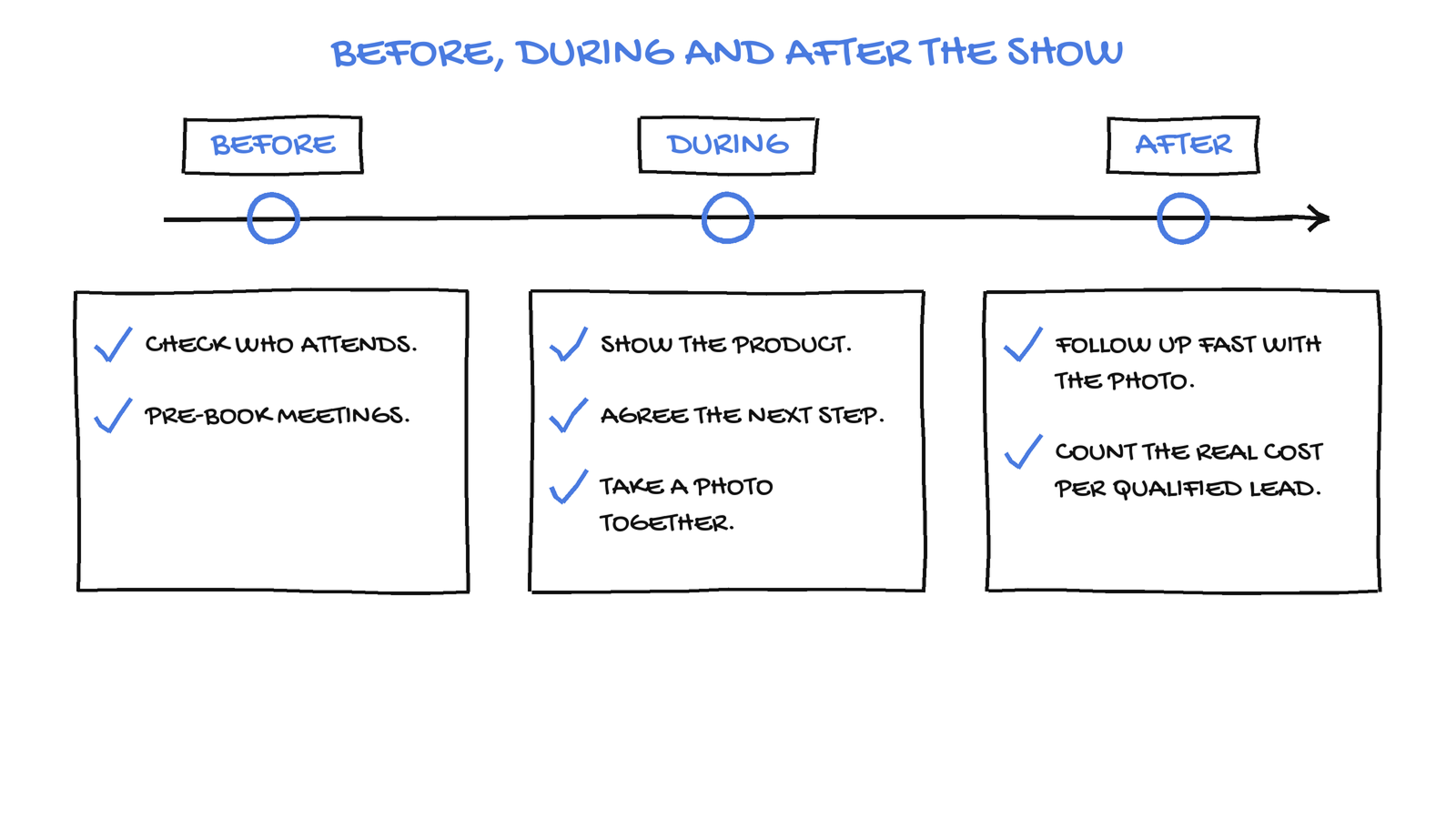
After the show, send whatever you promised quickly and refer back to what you actually discussed. Then be strict about the return. If meetings and leads are what you went for, count everything: the stand, travel, accommodation, freight and your team's time. If you spent €50,000 and came home with two qualified leads, that's a terrible result, and you could almost certainly have found two qualified leads somewhere else for a fraction of the cost. The exception is if you're going after very large accounts, where one deal can justify the whole trip.
How can institutions help manufacturers find distributors?
Export agencies, chambers of commerce, trade associations and business support networks can help with market information, introductions and partner searches. The useful part is working out which organisations actually have access to the companies you need, and exactly what their service will give you.
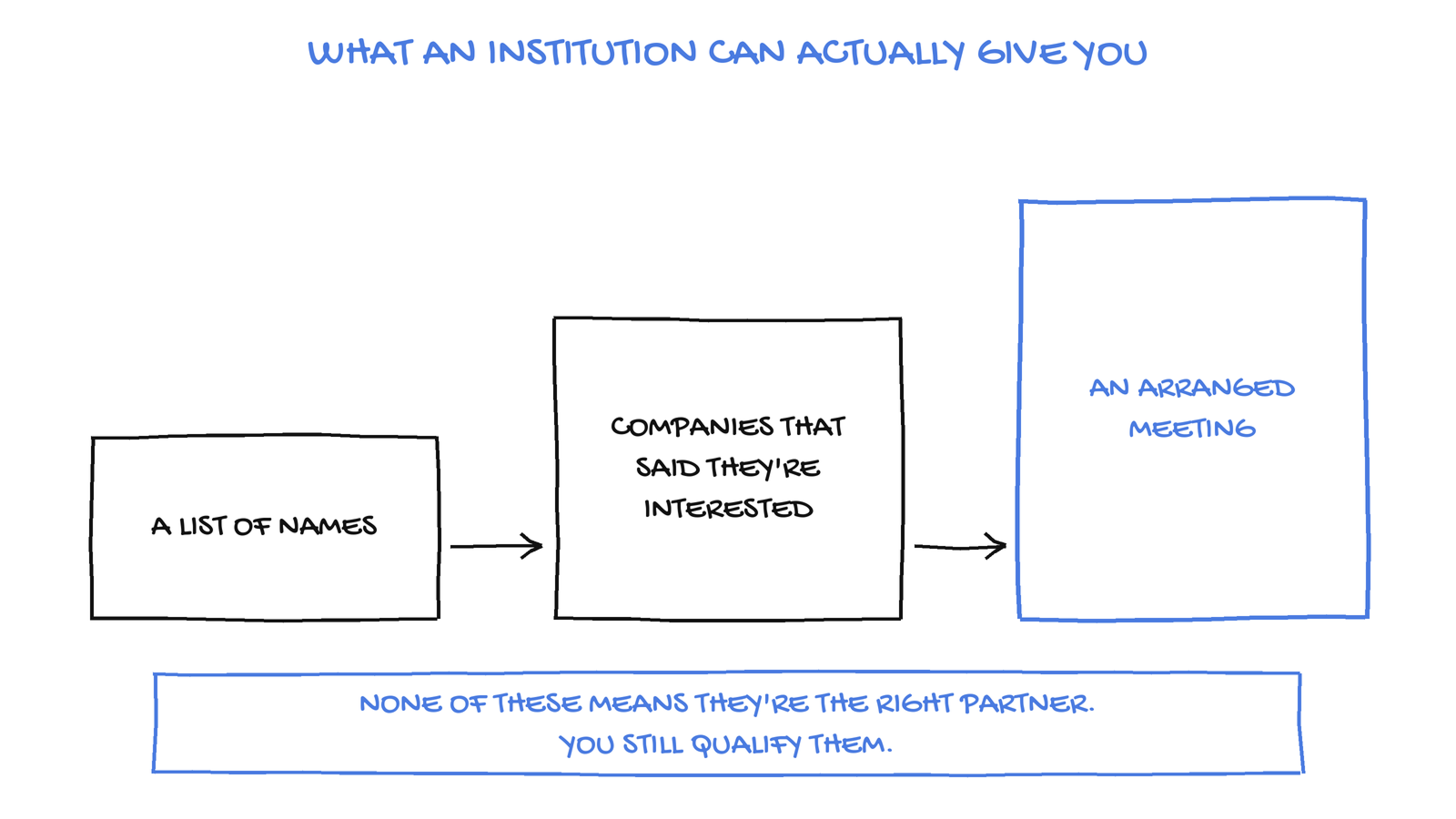
That second part matters more than people expect. The U.S. Commercial Service, for example, offers an International Partner Search that gives eligible U.S. exporters a list of up to five companies that have expressed interest in their product. Its Gold Key Service arranges meetings with up to five interested partners in a market. In Europe, the Enterprise Europe Network runs a partnering database where companies publish what they're looking for, including commercial agreements. Eligibility and costs vary, so check them for your own company.
There's a big difference between a list of names, a few companies that said they're interested and an actual meeting, and none of them automatically means a business meets your criteria. Before you commission anything, ask the organisation how it chooses the companies and what it will check before presenting them to you.
Then give the adviser a precise brief, the same way you would with a referral:
"We manufacture [product] for [customer type]. We're looking for a partner in [market] that already sells to [customers] and can [hold stock / demonstrate the product / provide service]. We can offer [support]. We'd also like your view on how this market is usually served."
That last line is worth including, because a good adviser can challenge your assumptions before finding contacts. Maybe you're asking for one national distributor when the market actually runs through regional specialists, or the companies you need describe themselves differently from the term you've been searching. Otherwise, you can pay for a perfectly competent search for the wrong type of business.
Once you're connected to someone, treat them like any other lead. If the introduction is just a name, start with a short phone call to qualify them. I use the BANT framework for this: budget, authority, need and timing. If it makes sense, set up a video call. If the institution has already arranged a meeting, go straight to the video call. Either way, the first call is discovery and you don't pitch anything. It's about getting to know each other, learning about their company and figuring out whether they're the right partner.
How should a manufacturer choose where to start?
Start with how easily you can identify suitable distributors and what they'd need to see before taking the opportunity seriously. If you can name most of the suitable companies, outbound is usually the obvious place to start. If there are hundreds and you can't find them one by one, ads start to make more sense. A strong relationship points to a referral, and a product that has to be seen working might justify a show. Whatever you choose, set a budget and a review date, then look at the reasons behind the results.
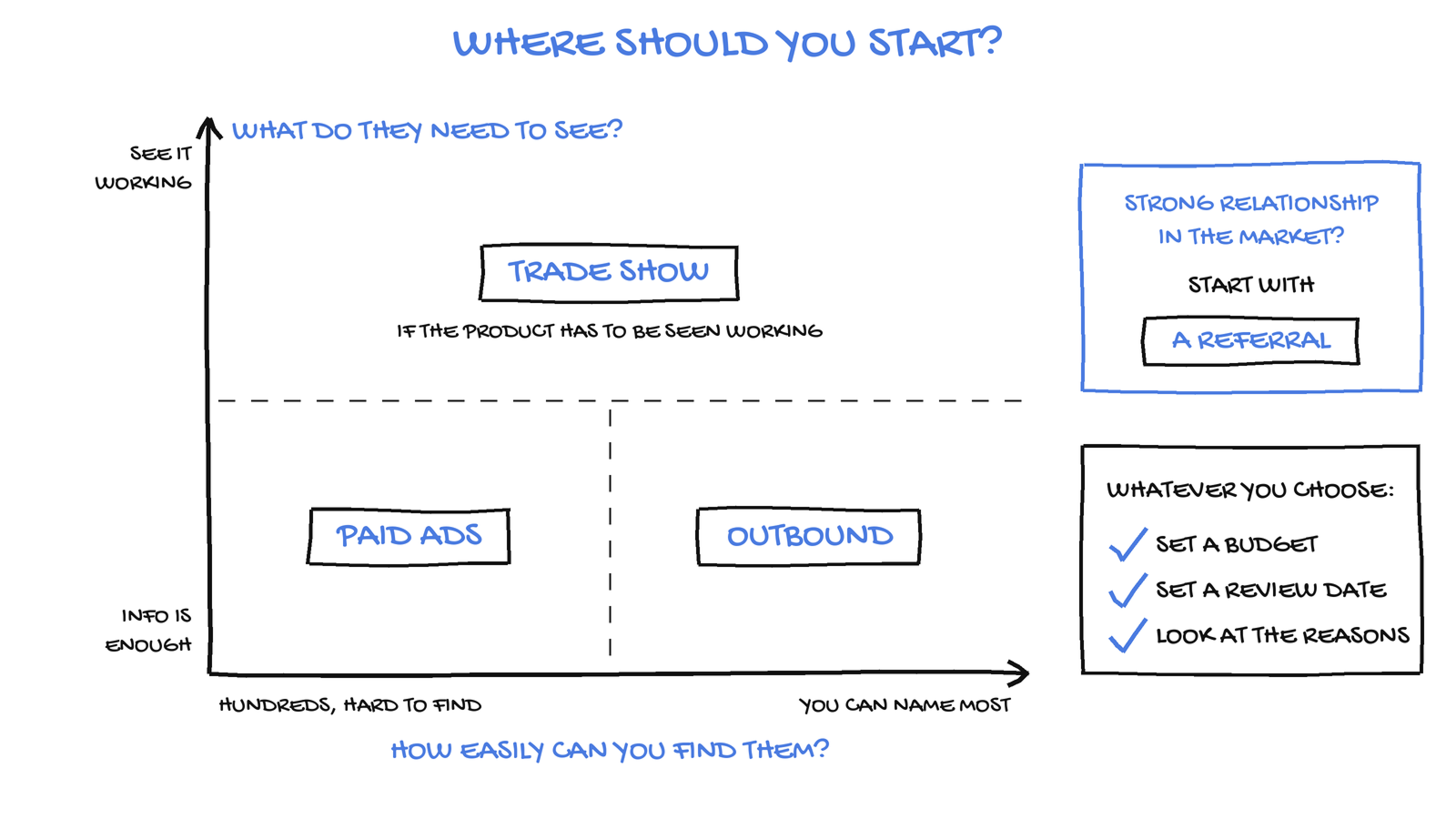
That last part matters more than people think. If suitable distributors keep telling you the stock requirement is too high or there isn't enough margin in it for them, switching channels will just put more people in front of the same objection. At that point, the recruitment process is telling you what needs to change in the offer.
The routes also work together. An institutional introduction can turn into a meeting at a show, outbound can warm up companies before you visit a market, and an ad enquiry can develop through calls, samples and an in-person demo. You don't need every channel running at once, just one credible way to reach the right businesses and the discipline to learn from what those conversations tell you.
Once a company is interested, the next question is whether it can actually build repeat business for you. I cover that in how to evaluate a distributor before giving them your market.
Frequently asked questions
Can you advertise to distributors on social media?
Yes. Fewer manufacturers do it than use outbound or trade shows, which is part of why it can work so well. It also puts you in a stronger position. When a distributor responds to your ad, they're the one reaching out, so you already know they want something from you. With outbound or at a trade show, you've shown your cards first, because whoever reaches out first has told the other side that they want something.
Can you find distributors without attending trade shows?
Yes. You can reach them through direct outreach, referrals, ads or institutional partner searches without booking a stand. A show becomes worth it when the right distributors attend and meeting in person actually adds something, like demonstrating the product or moving forward a conversation you've already started.
Where should you look for potential distributors?
Databases like Apollo, Ocean.io and LinkedIn Sales Navigator are a good start, along with competitors' and complementary brands' distributor pages, retailers you want to sell into and exhibitor lists. If you're more technical, you can also run crawlers or scrapers. Then check each company's customers, range and capabilities before treating it as a real prospect.
What should you prepare before contacting a distributor?
Less than most people think. Everybody wants to be perfectly prepared, but there's no such thing. You need an offer, a rough idea of your break-even point in terms of MOQ (how much they'd need to buy and how much they could realistically sell) and a clear picture of your ideal partner and ideal customer. The easiest way to build that picture is to work backwards: start with who actually buys the product at the end, then figure out which companies already sell to those buyers.