One Big Distributor or Several Regional Partners? Advice for Smaller Manufacturers
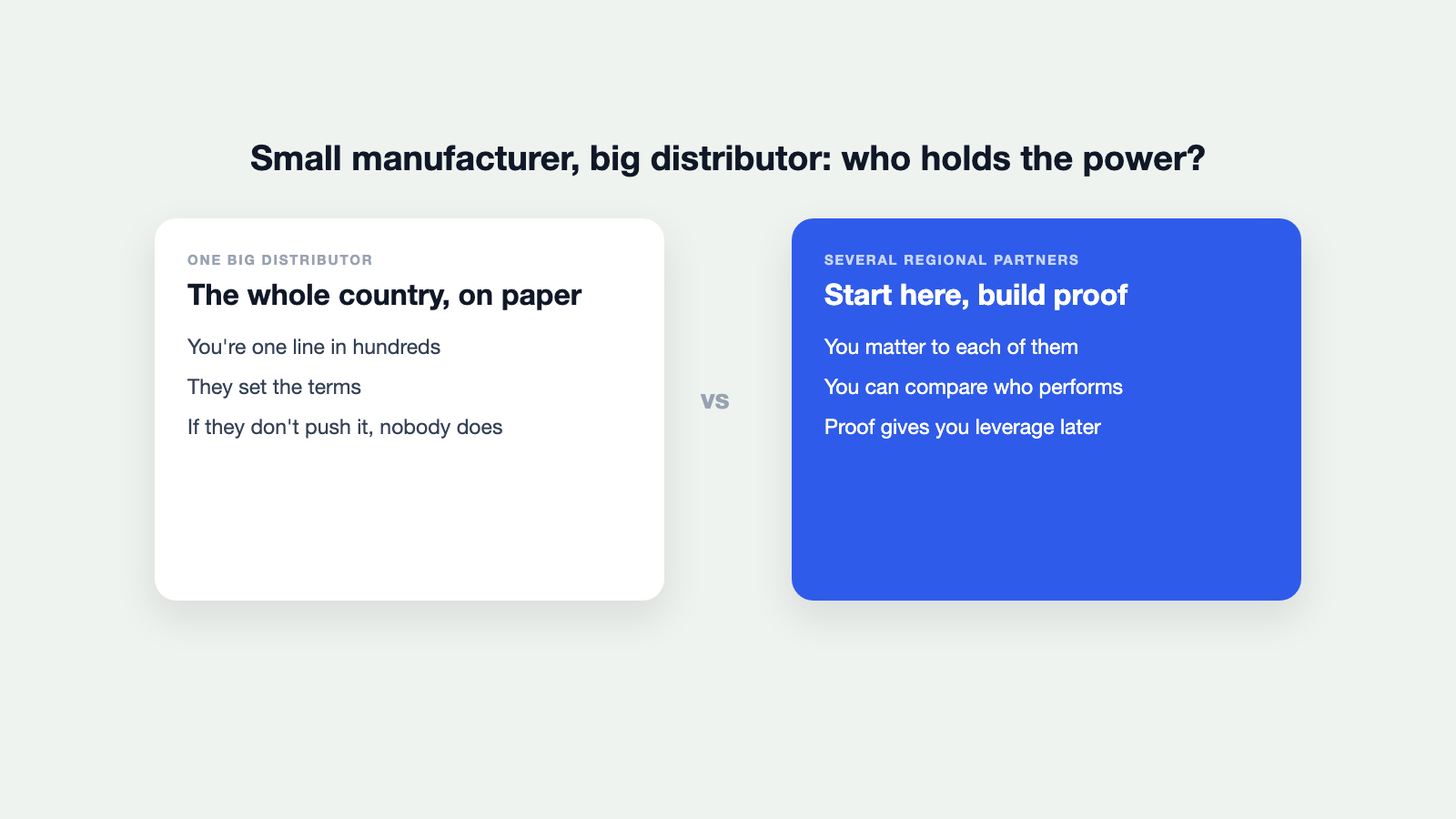
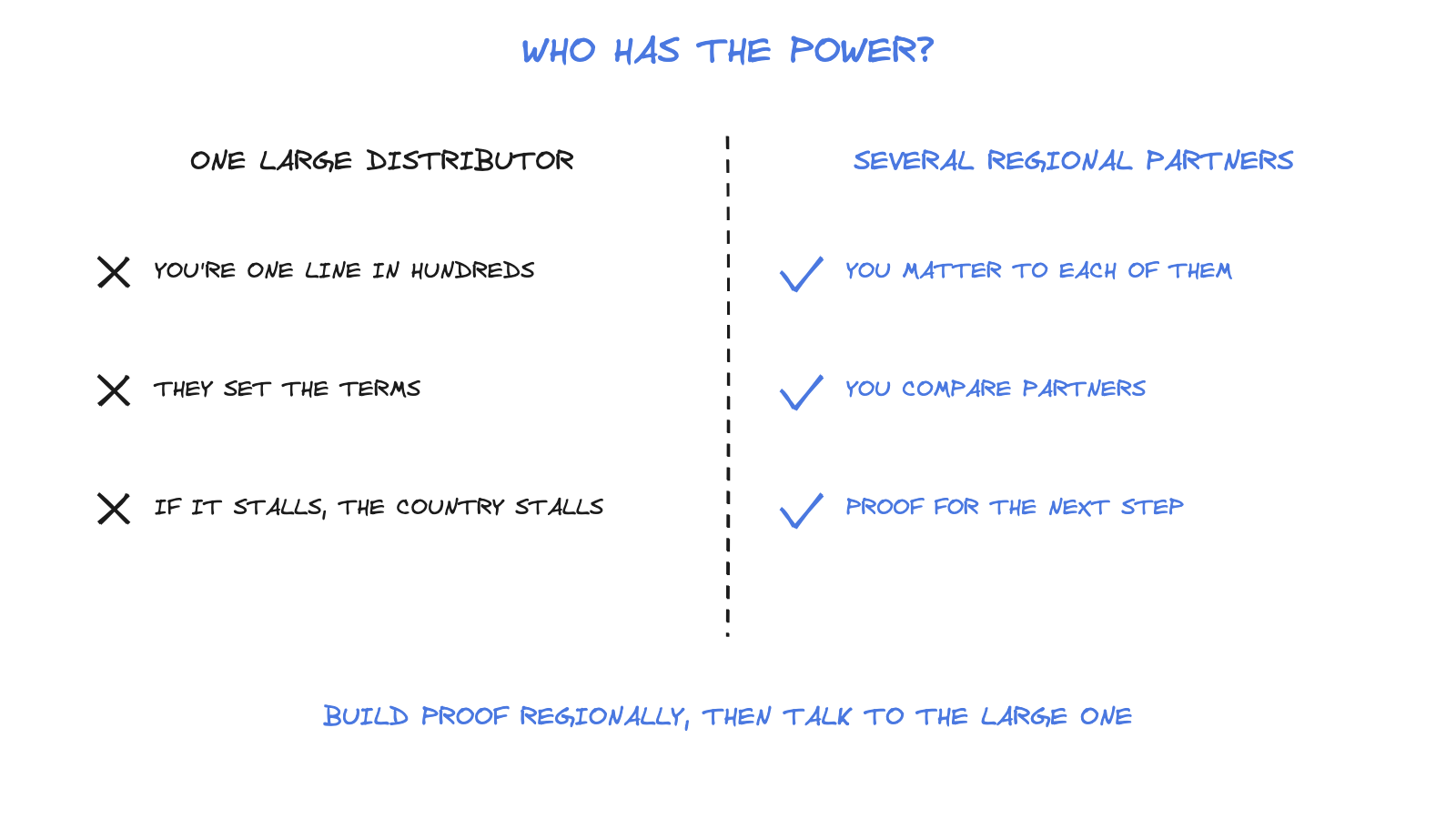
If you're a smaller manufacturer, I'd usually start with several regional distributors rather than one big national or master distributor. A big distributor can sell a lot, but you're rarely their priority, and they have far more power in the relationship than you do. Build proof with regional partners first. Once you can show that your product sells, you can go to a bigger distributor with real negotiating power.
First, two terms that often get mixed up. A large national distributor is simply a big company that covers the whole country itself. A master distributor is a company that takes your product for a whole country or region and manages other distributors or dealers under it. Both can be the right call, but for a smaller manufacturer they come with the same problem, which is the balance of power.
I get why the big distributor is tempting. It's just one signature, and voilà, the whole country is covered. You picture their catalogue reaching every customer you want, and in your head you're already thinking about hitting 100% growth in a year. And sometimes that happens. But most of the time, it doesn't go that way for a smaller company.
Why you're rarely the priority
A big distributor already has hundreds of products and dozens of brands, many of them bigger than you, and their sales team is paid to sell what moves. Your product is one more line in the catalogue. Sure, it means a lot to you, and you want them to care about it as much as you do, but most of the time they won't, because they don't have to.
The real problem is the imbalance of power. To me, working with a big distributor is a bit like playing football with the kid who owns the ball. It can be fun, everybody plays, and he's nice about it. But he decides the rules, and the day he's bored or doesn't like how it's going, he takes the ball and goes home. And nobody can argue, it's his ball after all. So likewise, in a negotiation with a distributor they can push you around, because they can afford to lose you and you can't really afford to lose them. They can ask for better margins, longer payment terms, exclusivity for the whole country and marketing money, and you'll feel pressure to say yes because it's the big one.
And when the product doesn't move, there's not much you can do. You're locked in, often with exclusivity, and the one partner covering the whole market isn't pushing you.
A story that stuck with me
I had a call with a Bulgarian FMCG manufacturer who told me he'd been through exactly this. According to him, a big distributor offered him an exclusive deal and promised to put his product everywhere. In return, they wanted equity in his company, and he agreed.
As he described it, they added the product to their catalogue, and that was more or less it. Their salespeople never really sold it. Six months later, when we spoke, he told me how demotivating it was, because they still held a share of his company and he couldn't take it back. The more you give before a partner has performed, the less leverage you have if they don't.
Why regional partners first
Several smaller, regional distributors change the balance. For them, your product can be a meaningful part of their business, so they actually put effort behind it. If one of them doesn't perform, you still have the others, and you haven't given one company the whole country.
It's not free, though. Several partners mean more work on your side: more onboarding, more communication and more follow-up. You also have to draw the territories clearly, or two of your partners end up chasing the same customers. But it gives you something you don't have yet: proof. After a year with three or four regional partners, you know which customers buy, how fast it sells, what the reorders look like and which objections come up. That's information you can take to a bigger distributor later.
When to go to a bigger distributor
Once your regional partners show there's demand, the conversation with a big distributor is completely different. You're not asking them to take a chance on an unknown product. You're showing them a product that already sells in their market, and positioning the deal as a win for them as well. That's when you have negotiating power, and it's the right time to have that conversation.
Of course, you don't have to go big at all. You can stay with the existing distributors that work, or even give country exclusivity to the one that's proven it can handle the whole region.
That said, there are cases as well where a bigger partner makes sense earlier. If you already have strong brand demand, a product that needs national logistics or service from day one, or a big company of your own behind you, the imbalance is smaller. But for most smaller manufacturers entering a new market, I'd build proof regionally first.
If you do sign a big distributor
Protect yourself. Tie any exclusivity to targets over an agreed period, with an exit if they're missed, and don't give away equity or long-term exclusivity before they've performed. I go into what to check before you commit in How to Evaluate a Distributor Before Giving Them Your Market, and how to structure a first order they'll actually reorder from in How to Structure an Opening Order a Distributor Will Actually Reorder From. Rules on distribution agreements differ by country, so have a local lawyer check the contract.
If you'd like help finding the right partners for your size in a new market, tell us about your market.
Frequently asked questions
Should a small manufacturer work with a big distributor?
Usually not at first. A big distributor rarely makes a small manufacturer's product a priority and has much more negotiating power. Building proof with several regional distributors first gives you leverage when you approach a bigger one later.
Is one national distributor better than several regional ones?
It depends on your size and how proven your product is. For a smaller manufacturer entering a new market, several regional partners usually put in more effort and reduce the risk of one partner locking up the whole country.
Should you give a distributor equity or exclusivity to get a deal?
I'd be very careful. Giving equity or long exclusivity before a partner has performed reduces your leverage if they don't. If exclusivity is on the table, tie it to targets over an agreed period, and have a local lawyer check the contract.
About the author
Marijan Filipović is a co-founder at Spika, where he helps manufacturers find and sign international distributors. Spika has run distributor acquisition across more than 100 markets on 5 continents, combining direct outbound and inbound campaigns with the qualification and sales process required to move prospects from first conversation to a signed agreement.